









Python Beginner Mistakes Nobody Talks About (2026 Guide)
Discover the most common Python beginner mistakes nobody talks about in 2026. Learn how to avoid learning in the wrong order, build strong fundamentals, improve debugging skills, and grow faster with practical project-based learning tips from Neody IT and Lofar.tech.
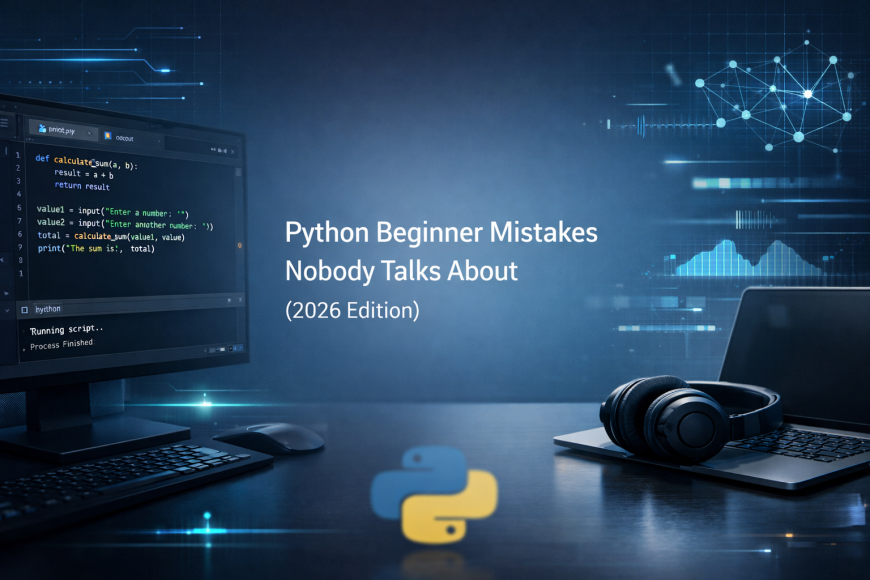
Python Beginner Mistakes Nobody Talks About (2026 Edition)
Most beginners don’t struggle with Python because it is difficult.
They struggle because they learn in the wrong order.
At Neody IT, while working with developers, students, and beginner programmers, we have observed clear patterns that slow down progress. Interestingly, many of these mistakes are rarely discussed in beginner guides, yet they have the biggest impact on learning speed and confidence.
If you are starting your Python journey in 2026, understanding these common pitfalls can save you months of frustration and help you grow faster.
Let’s break them down.
Starting AI or Machine Learning Before Learning Core Python
With the rise of AI tools and machine learning trends, many beginners immediately jump into advanced topics like TensorFlow, PyTorch, neural networks, or AI APIs.
While excitement is good, skipping fundamentals creates major problems.
Without understanding core Python concepts, even simple errors feel impossible to debug. The learning process becomes overwhelming because you are trying to understand complex frameworks before mastering basic programming logic.
Instead, focus on building a strong foundation first.
Learn variables, loops, functions, lists, dictionaries, and basic control flow. Build small scripts that solve simple problems. Develop logical thinking before diving into AI libraries.
AI becomes significantly easier when Python fundamentals are strong.
Tutorial Addiction: The Silent Productivity Killer
Watching tutorials can feel productive, but passive learning often creates a false sense of progress.
Many beginners spend hours watching videos without actually coding. They copy and paste code without understanding it, or repeatedly restart new courses hoping for clarity.
Real growth comes from doing, not just watching.
A better approach is to spend around 20 percent of your time learning from tutorials and 80 percent actively building something yourself.
At Neody IT, we consistently see beginners improve faster when they start shipping tiny projects early rather than waiting until they feel fully prepared.
Installing Too Many Tools and Frameworks
Another common mistake is overcomplicating the setup.
Beginners often install multiple IDEs, dozens of libraries, and complex environments before writing their first real program. This leads to confusion, environment errors, and unnecessary frustration.
The focus shifts away from learning Python and toward fixing setup issues.
A simple beginner stack is more than enough:
Python itself
VS Code or another simple editor
Virtual environments using venv
You do not need advanced tools during your first few months. Simplicity helps you concentrate on coding rather than configuration.
Ignoring Debugging Skills
Most tutorials present clean, perfect code that runs without issues. Real-world programming is very different.
Errors, bugs, and unexpected behavior are normal parts of development.
Many beginners assume something is wrong with Python when their code fails, but debugging is actually a core skill every programmer must learn.
Start developing debugging habits early:
Read error messages carefully instead of ignoring them.
Use print statements to inspect variables and flow.
Break problems into smaller parts to isolate issues.
Developers at Lofar.tech often spend more time debugging than writing new code, and that is completely normal in professional development.
Trying to Memorize Syntax Instead of Understanding Logic
A common misconception is that programming requires memorizing every function or exact syntax.
Programming is not about memorization. It is about understanding logic and problem solving.
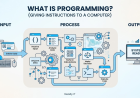
Instead of trying to remember everything, focus on understanding how data flows through a program:
Input leads to processing, which produces output.
When you understand logic clearly, syntax becomes natural through repetition and practice.
Not Building Real Projects Early
This is one of the biggest hidden mistakes beginners make.
Many people wait until they feel “ready” before starting projects. The truth is that projects are not something you do after learning. Projects are how you learn.
Start small and simple.
Create a calculator script.
Build a file organizer automation tool.
Write a simple web scraper.
Experiment with command-line tools.
Real projects transform theoretical knowledge into practical skill and help you understand programming deeply.
Closing Insight
Python itself is not difficult.
Unstructured learning is.
By avoiding these hidden beginner mistakes and following a clear learning roadmap, you can progress faster than most new programmers.
Focus on fundamentals, build consistently, keep your tools simple, and embrace debugging as part of the journey. Over time, confidence and skill will grow naturally.
If you are starting your Python journey in 2026, remember that consistency beats complexity. Learn step by step, build real things, and enjoy the process.
What's Your Reaction?
 Like
25
Like
25
 Dislike
3
Dislike
3
 Love
6
Love
6
 Funny
0
Funny
0
 Angry
3
Angry
3
 Sad
3
Sad
3
 Wow
7
Wow
7

Related Posts




-
 Ayush GuptaFrontend sikhnrha hu
 -
Tanushree meherPython2026
-
Sneha YadavEngineering