











DSA for Beginners: Complete Data Structures and Algorithms Guide
Learn DSA from scratch with this beginner-friendly guide. Understand data structures, algorithms, Big O, DSA roadmap, LeetCode practice, and common beginner mistakes.
DSA for Beginners: How to Learn Data Structures and Algorithms the Right Way
Data Structures and Algorithms (DSA) is one of the most important topics for anyone learning programming and preparing for a software development career. Whether you are a college student, beginner programmer, or preparing for coding interviews, learning DSA can significantly improve your problem-solving and programming skills.
However, many beginners make the same mistake: they open LeetCode, pick a random problem, get stuck within five minutes, and then search “How to learn DSA?”
The problem isn't always that DSA is difficult.
The real problem is that beginners often treat DSA as a list of hundreds of topics and questions instead of understanding the fundamentals behind it.
In this guide, we'll understand what DSA is, why DSA is important, what to learn first, and how beginners can create a proper DSA learning roadmap.
What Is DSA?
DSA stands for Data Structures and Algorithms.
It is the combination of two fundamental concepts in computer science:
-
Data Structures - How data is organized and stored.
-
Algorithms - How problems are solved efficiently using that data.
Think of it this way:
Data Structures decide how you store data, while Algorithms decide how you process that data.
For example, if you have thousands of names that need to be searched quickly, simply storing them isn't enough. You also need an efficient algorithm to find the required name.
This combination of efficient data organization and problem-solving is what makes DSA so important.
What Are Data Structures?
A Data Structure is a way of organizing and storing data so that it can be accessed and modified efficiently.
Some of the most common data structures beginners should learn are:
1. Array
An array stores multiple elements in an ordered collection.
Arrays are one of the first data structures beginners learn because they form the foundation for many other concepts.
2. Linked List
A linked list stores elements as connected nodes. Each node generally contains data and a reference to another node.
Linked lists help beginners understand concepts such as pointers, references, and dynamic memory structures.
3. Stack
A stack follows the LIFO (Last In, First Out) principle.
A simple real-world example is a stack of plates. The last plate placed on the stack is the first one you remove.
The browser's Back functionality is another commonly used example of stack-like behavior.
4. Queue
A queue generally follows the FIFO (First In, First Out) principle.
Think about people standing in a line. The person who arrives first is usually served first.
5. Tree
Trees represent hierarchical data.
File systems, organizational structures, and many database systems use tree-like structures.
6. Graph
Graphs represent relationships or connections between objects.
For example, social networks can be represented using graphs where users are nodes and relationships are edges.
What Are Algorithms?
An algorithm is a step-by-step method for solving a problem.
Suppose you have a list containing thousands of numbers and need to find a particular number.
You could check every element one by one, or you could use a more efficient approach if the data is sorted.
This is where algorithms become important.
Some important algorithmic concepts include:
-
Searching
-
Sorting
-
Recursion
-
Greedy Algorithms
-
Backtracking
-
Dynamic Programming
-
Graph Algorithms
-
Tree Traversal
-
Divide and Conquer
The goal isn't simply to memorize these algorithms.
The goal is to understand when and why an algorithm should be used.
Why Is DSA Important?
Many beginners ask:
“Do I really need DSA to become a developer?”
The answer depends on your career path, but DSA is extremely valuable for building strong problem-solving skills.
1. Improves Problem-Solving
DSA teaches you how to break a large problem into smaller, manageable parts.
Instead of immediately writing code, you learn to analyze the problem and design a solution.
2. Helps With Coding Interviews
DSA is commonly used in technical interviews, particularly for software engineering and product-based companies.
Interviewers often want to understand how you approach problems, analyze complexity, and optimize your solution.
3. Teaches Efficient Programming
Two programs can produce the same output but have completely different performance.
DSA teaches you to think about:
-
Time complexity
-
Space complexity
-
Scalability
-
Optimization
4. Builds Strong Programming Fundamentals
Once you understand DSA, learning advanced programming concepts becomes easier because you already understand how data and algorithms interact.
DSA Is More Than LeetCode
One of the biggest misconceptions among beginners is:
DSA = solving LeetCode questions.
LeetCode and similar platforms are useful for practicing DSA, but they are not DSA itself.
If you don't understand arrays, recursion, stacks, queues, trees, graphs, or complexity analysis, randomly solving hundreds of problems won't necessarily build strong fundamentals.
Think of DSA as a problem-solving gym.
Learning the concepts is your training, solving problems is your practice, and gradually solving harder problems is how you build strength.
DSA Roadmap for Beginners
If you're starting DSA from zero, avoid jumping directly into advanced topics.
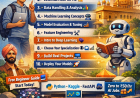
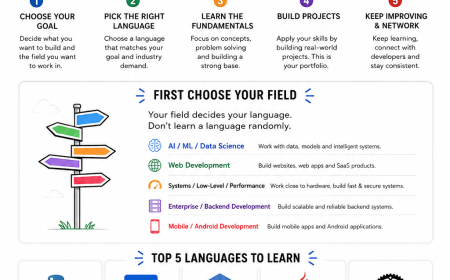
A simple DSA roadmap can look like this:
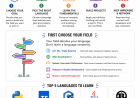
Step 1: Choose a Programming Language
First, become comfortable with one programming language.
You can learn DSA using languages such as:
-
C++
-
Java
-
Python
-
JavaScript
-
TypeScript
The language matters less than understanding the concepts and being able to implement them.
Step 2: Learn Programming Fundamentals
Before DSA, understand:
-
Variables
-
Data types
-
Conditions
-
Loops
-
Functions
-
Arrays
-
Strings
-
Basic input/output
Step 3: Learn Complexity Analysis
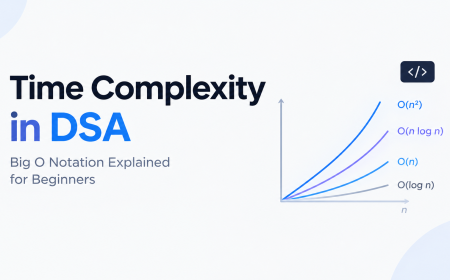
Understand Big O notation and learn how to evaluate the time and space requirements of your solutions.
Step 4: Learn Core Data Structures
Start with:
Arrays → Strings → Linked Lists → Stack → Queue → Hashing → Trees → Heaps → Graphs
Step 5: Learn Important Algorithms
After understanding the basic data structures, move toward:
Searching → Sorting → Recursion → Binary Search → Greedy → Backtracking → Dynamic Programming → Graph Algorithms
Step 6: Practice Problems
Only after learning a concept should you start solving related problems.
Start with easy problems, understand the solution, and gradually increase the difficulty.
How Many DSA Questions Should You Solve?
There is no magic number.
Solving 500 random questions is not automatically better than solving 100 carefully selected questions.
Focus on understanding patterns.
For example, after solving several array problems, you may start recognizing patterns such as:
-
Two Pointers
-
Sliding Window
-
Prefix Sum
-
Hashing
-
Binary Search
The objective is to reach a point where you can look at a new problem and think:
“I've seen a similar pattern before.”
That's when DSA starts becoming useful.
Common Mistakes Beginners Make While Learning DSA
Avoid these mistakes:
Randomly Solving Problems
Don't jump between graphs, DP, arrays, and trees without understanding the fundamentals.
Memorizing Solutions
Understanding the logic is much more valuable than memorizing code.
Ignoring Complexity
A solution that works for 10 inputs may fail for 10 million inputs.
Always think about time and space complexity.
Moving Too Fast
Don't rush into Dynamic Programming simply because it sounds advanced.
Strong fundamentals make advanced DSA much easier.
Frequently Asked Questions About DSA
Is DSA difficult for beginners?
DSA can feel difficult initially because it requires a different way of thinking. However, learning it step-by-step makes it much more manageable.
Which language is best for DSA?
C++, Java, and Python are popular choices. Choose a language you are comfortable writing and focus primarily on understanding the concepts.
Can I learn DSA without competitive programming?
Yes. Competitive programming can improve problem-solving speed, but it is not mandatory for learning DSA.
Should I start LeetCode as a beginner?
You can use LeetCode after learning basic programming and DSA concepts. Starting with random difficult problems is usually not the best approach.
How long does it take to learn DSA?
It depends on your existing programming knowledge and consistency. For most beginners, DSA is better approached as a gradual learning process rather than something to finish in a few weeks.
Final Thoughts
DSA isn't just about passing coding interviews.
It teaches you how to think about problems, organize information, analyze solutions, and write efficient programs.
Instead of opening LeetCode and randomly solving questions, build your fundamentals first.
Learn the concept.
Understand why it works.
Implement it yourself.
Then solve problems based on that concept.
That's the difference between memorizing DSA and actually learning DSA.
At Neody IT and Lofar.tech, our goal is to make complex technology concepts easier to understand through practical, beginner-friendly learning.
And if you're starting your DSA journey, don't worry about solving 500 questions today.
Start with the fundamentals. Build the habit. Solve consistently.
Your DSA journey starts with one problem - but it grows through the way you learn to solve problems.
What's Your Reaction?
 Like
2
Like
2
 Dislike
0
Dislike
0
 Love
1
Love
1
 Funny
0
Funny
0
 Angry
0
Angry
0
 Sad
1
Sad
1
 Wow
0
Wow
0