






What is Programming? Introduction to Python for Beginners
Learn what programming is and why it matters. This beginner friendly guide introduces Python, its features, and how to install Python to start coding today with Neody IT.
What is Programming? A Beginner-Friendly Introduction to Python
Python Learning Series #1 by Neody IT
Technology surrounds us everywhere. From the smartphone in your hand to the recommendation system on Netflix, almost every modern tool is powered by software. But have you ever wondered how these systems actually work?
Behind every mobile application, website, and artificial intelligence system is something called programming.
Programming is the foundation of the digital world. It is what allows humans to communicate with computers and instruct them to perform tasks. If you are planning to enter the world of software development, data science, artificial intelligence, or cybersecurity, learning programming is the first step.
In this Python series by Neody IT, we will guide beginners step by step into the world of programming using one of the most powerful and beginner friendly languages available today: Python.
This first article is designed to remove the fear of programming and help you understand the basics before writing your first program.
Why Programming Matters Today
We live in a world driven by software. Every service you use online is built using programming.
For example:
-
Instagram uses programming to manage millions of user posts and messages.
-
Netflix uses algorithms written in code to recommend movies based on your interests.
-
Banking applications rely on programming to process secure transactions.
-
Ride sharing apps like Uber use code to match drivers with passengers in real time.
All of these systems depend on programmers who write instructions that computers can understand.
Programming is no longer just a skill for software engineers. It has become a powerful tool across many industries such as finance, healthcare, education, marketing, and research.
At Neody IT, we believe that understanding programming gives individuals the ability to create technology rather than just consume it.
What is Programming?
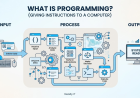
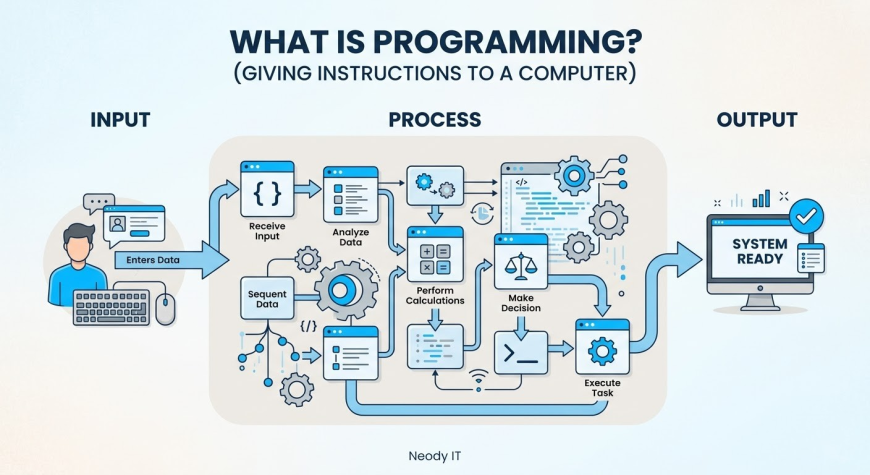
In simple terms, programming is the process of giving instructions to a computer.
Computers are extremely powerful machines, but they cannot think on their own. They simply follow instructions given by humans.
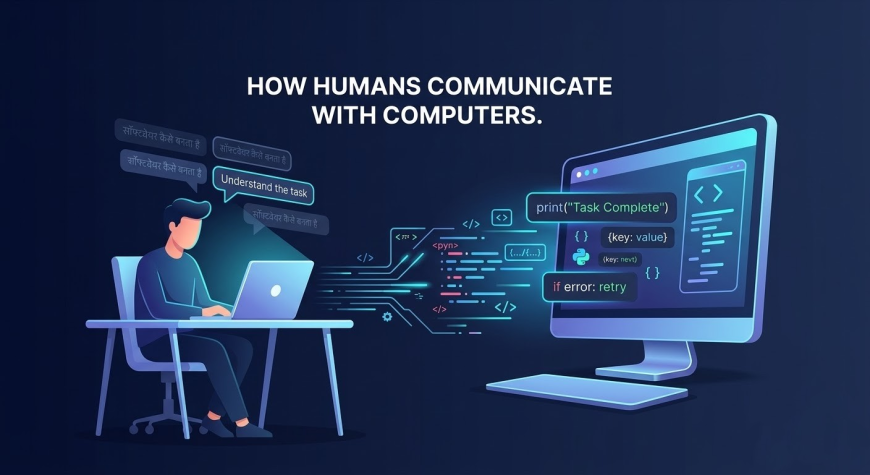
However, computers cannot understand human languages like Hindi or English directly. Instead, we use programming languages to communicate with them.
Think of programming like this.
Humans communicate with each other using languages such as English, Hindi, or Spanish. Similarly, humans communicate with computers using languages like:
-
Python
-
Java
-
C++
-
JavaScript
These languages allow programmers to write instructions that computers can execute.
For example, a simple programming instruction might tell the computer to:
-
Add two numbers
-
Display a message on the screen
-
Store information in a database
-
Make a decision based on conditions
When multiple instructions are combined together, they form a program that can perform complex tasks.
This is how software applications, websites, and digital systems are built.
Why Should You Learn Programming?
Learning programming opens up a world of opportunities. It allows you to build solutions, automate tasks, and even create your own software products.
Some of the biggest benefits of learning programming include:
Automating Repetitive Tasks
Programming allows you to automate tasks that would normally take hours to complete manually. For example, data processing, report generation, and file organization can all be automated with code.
Building Websites and Applications
Programming is the foundation of modern websites and mobile applications. Developers use programming languages to build platforms that millions of people use every day.
Working with Artificial Intelligence
Artificial intelligence and machine learning rely heavily on programming. Python, in particular, is one of the most widely used languages in AI development.
Data Analysis and Decision Making
Organizations rely on data to make decisions. Programming allows analysts to process large datasets and extract meaningful insights.
Creating Software Products
Many startups and tech companies build innovative products using programming. With the right skills, you can build tools, platforms, or applications that solve real world problems.
Because of these advantages, programming skills are in high demand across industries.
Some popular career paths include:
-
Software Developer
-
Data Analyst
-
Data Scientist
-
AI Engineer
-
Cybersecurity Specialist
At Neody IT, we often encourage students and developers to start with Python because it provides a strong foundation for many of these career paths.
What is Python?
Python is one of the most popular programming languages in the world.
It was created by Guido van Rossum and first released in 1991. Since then, it has grown into a powerful language used by developers, researchers, and companies worldwide.
What makes Python unique is its simplicity.
Unlike many programming languages that have complicated syntax, Python focuses on readability. The code often looks similar to simple English statements, which makes it easier for beginners to understand.
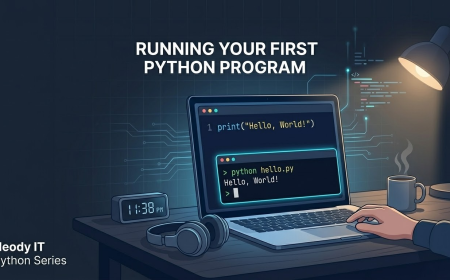
For example, a basic Python program looks like this:
print("Hello World")
This line of code tells the computer to display the text Hello World on the screen.
The print() function is one of the first commands beginners learn in Python. It simply outputs text or data to the console.
Because of its simple structure, Python is often recommended as the best programming language for beginners.
At Neody IT, we frequently introduce Python in our workshops and technical programs because it allows learners to quickly understand programming concepts.
Why Python is So Popular
Python has become one of the most widely used programming languages in the world. There are several reasons for its massive popularity.
Simple and Clean Syntax
Python is designed to be readable. The syntax is simple, which makes it easier to learn compared to many other programming languages.
Large Developer Community
Python has one of the largest programming communities globally. This means beginners can easily find tutorials, libraries, and support when learning.
Powerful Libraries and Tools
Python offers thousands of libraries that simplify complex tasks such as machine learning, web development, and data analysis.
Used Across Multiple Industries
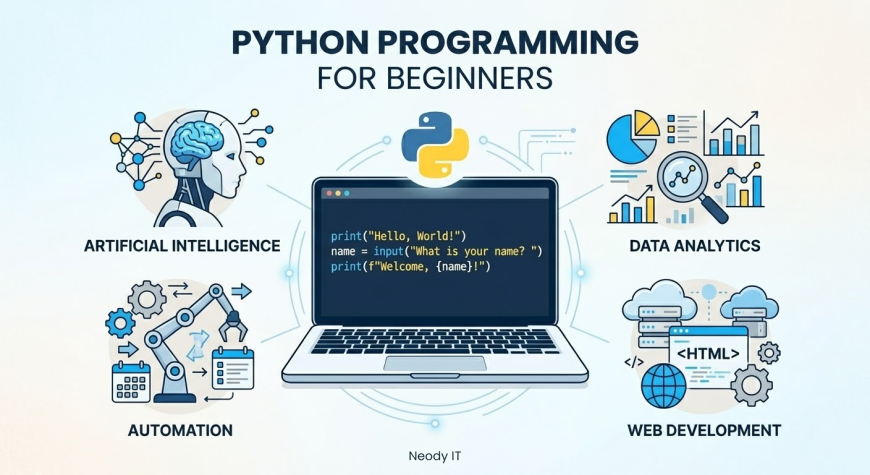
Python is used in various domains including:
-
Artificial Intelligence
-
Web Development
-
Data Science
-
Automation
-
Cybersecurity
Trusted by Leading Companies
Many global technology companies rely on Python for their systems, including:
-
Google
-
Netflix
-
Instagram
-
Spotify
This widespread adoption shows how powerful and flexible the language is.
Key Features of Python
Python offers several features that make it ideal for both beginners and experienced developers.
Easy to Understand
Python code is designed to be clear and readable. This makes it easier for beginners to understand programming concepts without getting overwhelmed.
Free and Open Source
Python is completely free to use. Anyone can download it, modify it, and build applications using it.
Thousands of developers around the world contribute to improving Python and its ecosystem.
High Level Language
Python is considered a high level programming language. This means developers do not need to manage complex hardware operations. Instead, they can focus on solving problems and writing logic.
Portable
Python programs can run on different operating systems without major modifications.
You can run Python on:
-
Windows
-
Linux
-
macOS
This portability makes Python extremely flexible.
Huge Library Ecosystem
Python provides libraries for almost every type of development task, including:
-
Data science and analytics
-
Machine learning and artificial intelligence
-
Web development
-
Automation and scripting
This rich ecosystem allows developers to build complex systems efficiently.
What Can You Build with Python?
One of the most exciting things about Python is the wide range of applications you can build with it.
Web Applications
Frameworks like Django and Flask allow developers to create powerful web applications.
Data Analysis Tools
Python is widely used by data analysts to process and visualize data.
Artificial Intelligence Systems
Machine learning frameworks like TensorFlow and PyTorch rely heavily on Python.
Automation Scripts
Python can automate repetitive tasks such as file management, email sending, and data processing.
APIs and Backend Systems
Many modern applications use Python to build backend services and APIs.
Python is even used in systems like Instagram's backend and YouTube's data processing tools.
Through our learning content at Neody IT, we often demonstrate real world Python use cases to help learners understand how powerful the language can be.
How to Install Python
Getting started with Python is very easy.
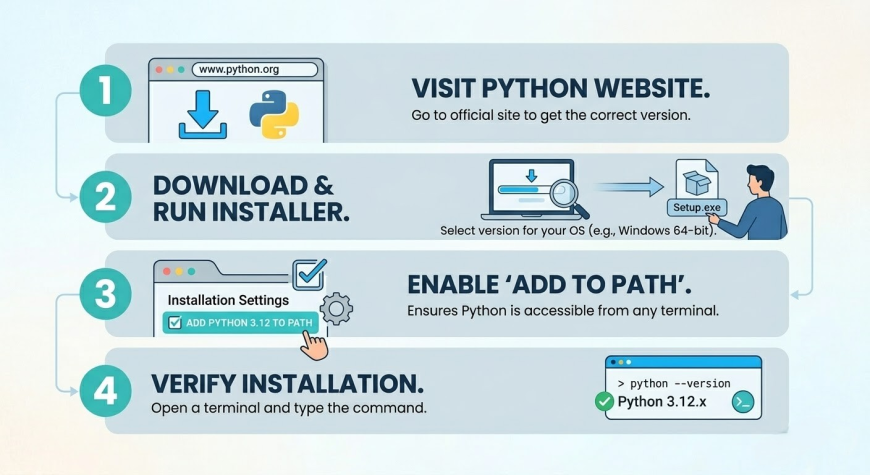
Follow these simple steps to install Python on your computer.
Step 1
Visit the official Python website at:
python.org
Step 2
Click the Download Python button for your operating system.
Step 3
Run the downloaded installer.
Step 4
During installation, make sure to check the option labeled:
Add Python to PATH
This step is important because it allows you to run Python commands from your system terminal.
Step 5
Click Install Now and wait for the setup to complete.
Once the installation finishes, Python will be ready to use.
How to Verify Python Installation
After installing Python, it is a good idea to confirm that the installation was successful.
Open your Command Prompt or Terminal and run the following command:
python --version
If Python is installed correctly, the system will display something similar to:
Python 3.12.0
This confirms that Python is ready for programming.
Your First Python Program
Now that Python is installed, you can write your first program.
Open the Python interpreter or a code editor and write the following code:
print("Welcome to Python Programming")
This program instructs the computer to display the message on the screen.
The output will look like this:
Welcome to Python Programming
Although this example is very simple, it represents the first step in learning programming.
Every complex application starts with simple instructions like these.
Quick Summary
Let us quickly review what we learned in this article.
-
Programming is the process of giving instructions to a computer.
-
Programming languages allow humans to communicate with machines.
-
Python is one of the easiest and most powerful languages for beginners.
-
It is widely used in web development, AI, automation, and data science.
-
Python can be installed easily and used to write simple programs within minutes.
At Neody IT, our goal is to make programming education accessible and practical for beginners who want to enter the technology industry.
Practice Task for Beginners
Try running this simple Python command on your system:
print("My first Python program")
Once you see the output on your screen, congratulations. You have written your first line of Python code.
What Comes Next in the Python Series
This article introduced the basics of programming and Python.
In the next article in this Python learning series by Neody IT, we will explore how to properly set up the Python environment and begin writing more useful programs.
Programming may seem intimidating at first, but with the right guidance and consistent practice, anyone can learn it.
If you are interested in building real technology products, automating tasks, or entering the software industry, learning Python is an excellent place to start.
Stay connected with Neody IT Tech Blog for more practical programming tutorials, development guides, and technology insights.
What's Your Reaction?
 Like
2
Like
2
 Dislike
0
Dislike
0
 Love
2
Love
2
 Funny
0
Funny
0
 Angry
0
Angry
0
 Sad
0
Sad
0
 Wow
2
Wow
2